|

Thank you for joining us at the ACE 2026 Annual Meeting in Buffalo, New York! We look forward to seeing you in 2027 at the next Annual Meeting!
Other Hotels close to Aloft, in Buffalo, NY:
- Holiday Inn Express & Suites Buffalo Downtown - Medical Ctr by IHG — 0.2 miles |
- The Westin Buffalo — 0.2 miles |
- Hampton Inn & Suites Buffalo Downtown — 0.3 miles |
- Curtiss Hotel — 0.3 miles |
- Embassy Suites by Hilton Buffalo — 0.3 miles |
- Hyatt Regency Buffalo / Hotel and Conference Center — 0.4 miles |
- Best Western - On The Avenue — 0.4 miles |
- Hilton Garden Inn Buffalo Downtown — 0.5 miles |
- Residence Inn by Marriott Buffalo Downtown — ~0.5–0.7 miles |
- Hotel at the Lafayette, Trademark Collection by Wyndham — 0.6 miles |
- Wyndham Garden Buffalo Downtown — 0.7 miles |
- Courtyard by Marriott Buffalo Downtown/Canalside — ~0.9 miles |
- Buffalo Marriott at LECOM HARBORCENTER — ~1.0 mile |
Underwriting Sponsor

Student Scholarship Sponsors


Innovation Sponsor

Keynote Speakers
Professor of Epidemiology and Population Health, Stanford University, School of Medicine
Adjunct Professor of Epidemiology, Harvard TH Chan School of Public Health
Former Dean of the Faculty, Harvard TH Chan School of Public Health
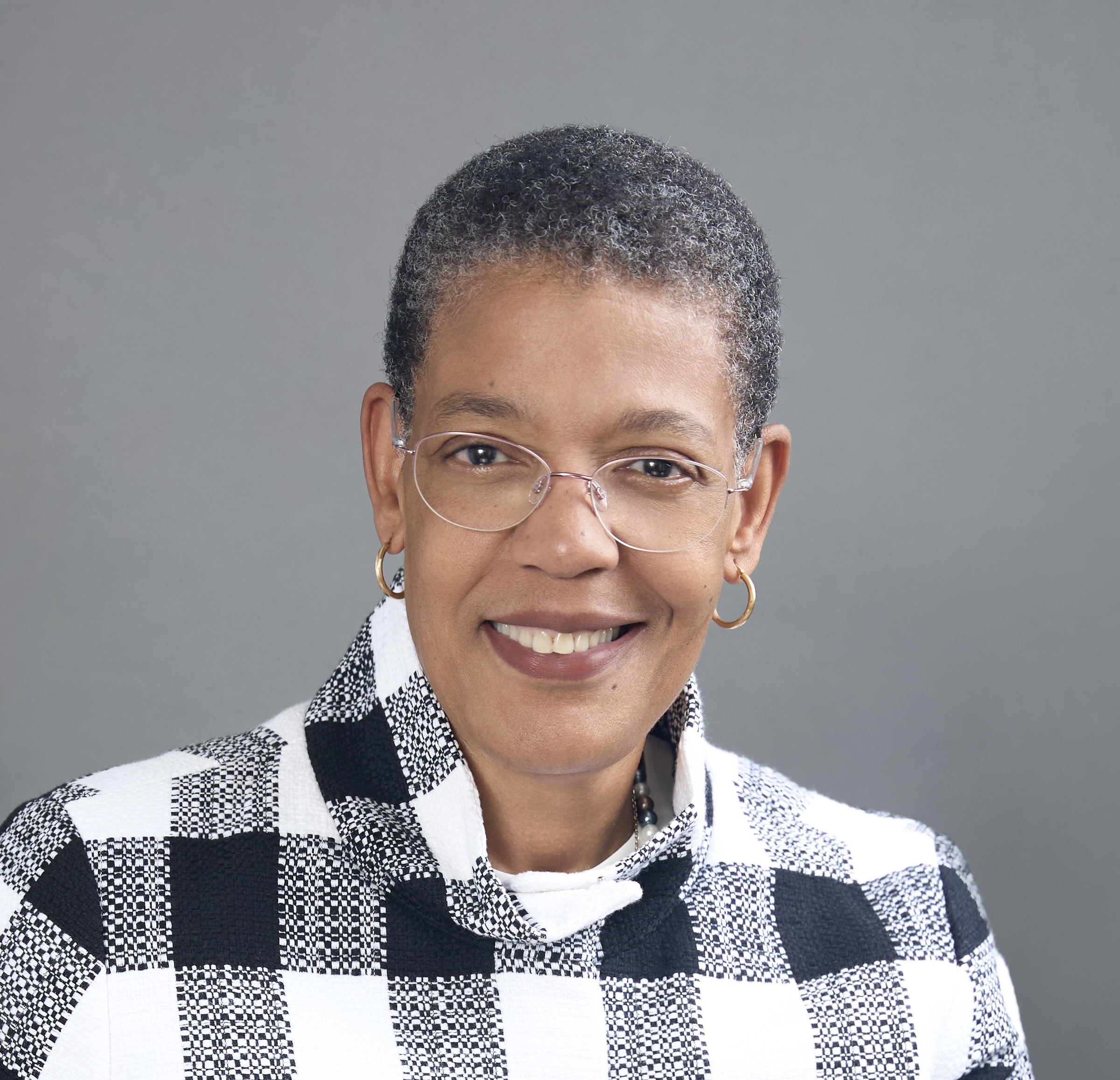 Dr. Williams is a renowned epidemiologist, an award-winning educator, and a widely recognized academic leader. Since stepping down as Dean of the Faculty at the Harvard T.H. Chan School of Public Health she joined Stanford University’s School of Medicine faculty as a tenured Professor of Epidemiology and Population Health. Prior to becoming Dean at Harvard, she was Professor and Chair of the Department of Epidemiology at the Harvard Chan School and Program Leader of the Population Health and Health Disparities Research Programs at Harvard’s Clinical and Translational Sciences Center. Her book, "The Cure for Everything: The Epic Struggle for Public Health and a Radical Vision for Human Thriving," was published by Penguin Random House on February 3, 2026. Dr. Williams is a renowned epidemiologist, an award-winning educator, and a widely recognized academic leader. Since stepping down as Dean of the Faculty at the Harvard T.H. Chan School of Public Health she joined Stanford University’s School of Medicine faculty as a tenured Professor of Epidemiology and Population Health. Prior to becoming Dean at Harvard, she was Professor and Chair of the Department of Epidemiology at the Harvard Chan School and Program Leader of the Population Health and Health Disparities Research Programs at Harvard’s Clinical and Translational Sciences Center. Her book, "The Cure for Everything: The Epic Struggle for Public Health and a Radical Vision for Human Thriving," was published by Penguin Random House on February 3, 2026.
Dr. Williams’ research places special emphasis in the areas of reproductive, perinatal, pediatric, and molecular epidemiology. She has published more than 560 scientific articles and was elected to the National Academy of Medicine in 2016. Her commitment to mentoring the next generation of public health leaders has been recognized through numerous prestigious awards, including the Presidential Award for Excellence in Science, Mathematics, and Engineering Mentoring from the White House in 2012. In 2020, she was awarded the Ellis Island Medal of Honor and recognized by PR Week as one of the top 50 health influencers of the year. In 2025, she received the Abraham Lilienfeld Award of the American College of Epidemiology.
Dr. Williams has an undergraduate degree in biology and genetics from Princeton University, a master’s in civil engineering from Tufts University, and master’s and doctoral degrees in epidemiology from the Harvard Chan School.
Dean of the National School of Tropical Medicine and Professor of Pediatrics and Molecular Virology & Microbiology at Baylor College of Medicine
Co-director of the Texas Children’s Center for Vaccine Development (CVD) and Texas Children’s Hospital Endowed Chair of Tropical Pediatrics

Prof. Peter Hotez MD PhD DSc (hon) FAAP FASTMH is Professor of Pediatrics and Molecular Virology and Microbiology at Baylor College of Medicine where he is also Co-Director of the Texas Children’s Hospital Center for Vaccine Development, and Dean of the National School of Tropical Medicine. He is also University Professor of Biology at Baylor University, Senior Fellow in Disease and Humanity at the James A Baker III Institute for Public Policy. Dr. Hotez is a vaccine scientist, biochemist, and pediatrician who has led or co-led the development of vaccines for parasitic infections-hookworm, schistosomiasis, Chagas disease-currently in clinical trials, and several coronavirus vaccines, including two low-cost COVID vaccines for global health so far administered to 100 million children and adults in India and Indonesia. He is also an ardent vaccine advocate and science explainer who combats antiscience and antisemitism in America, and globally.
Prof. Hotez has authored 6 single-authored books with Johns Hopkins University Press, including Vaccines Did Not Cause Rachel’s Autism, Preventing the Next Pandemic, and The Deadly Rise of Anti-science ,and in 2025 will co-author Science Under Siege(Public Affairs)with the climate scientist, Michael Mann. Dr. Hotez obtained his B.A. (phi beta kappa) from Yale University, M.D. from Weill Cornell Medical College, and Ph.D. from Rockefeller University. He obtained his pediatric residency and fellowship training from Massachusetts General Hospital and Yale School of Medicine.
Prof. Hotez is the author of more than 700 scientific papers, and he is an elected member of the National Academy of Medicine and American Academy of Arts and Sciences and has received numerous awards. They include the Scientific Freedom and Responsibility Award from AAAS, the Scientific Achievement Award from the AMA, the David E Rogers Award from the AAMC, the Science and Society Award from Sigma Xi, the Porter Prize in public health from the University of Pittsburgh, Winslow Medal from Yale School of Public Health, Mendel Medal in science and religion from Villanova University, Milton Popkin Award from the ADL Southwest, LBJ Moral Courage Award from the Holocaust Museum Houston, Walker Prize from the Boston Science Museum, and Smith Medal in Public Health from the NY Academy of Medicine. He was named TIME MagazineHealth100 in 2024 and one of 25 Global Leaders for U.S. News and World Report in 2025.
He has three honorary Doctor of Science degrees. Prof. Hotez served as US Science Envoy for the Middle East and North Africa in 2015-16, and he appears frequently on national media to explain biomedicine and pandemics.
Professor of Social Epidemiology and American Cancer Society Clinical Research Professor at the Harvard T.H. Chan School of Public Health (HSPH)
Director of the HSPH Interdisciplinary Concentration on Women, Gender, and Health
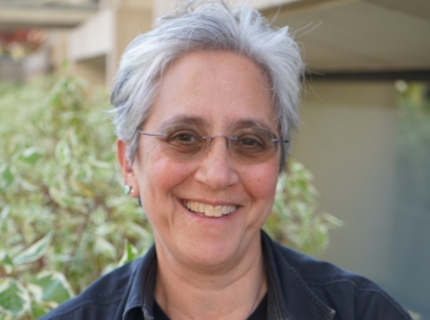 Nancy Krieger is Professor of Social Epidemiology and American Cancer Society Clinical Research Professor, in the Department of Social and Behavioral Sciences at the Harvard T.H. Chan School of Public Health (HSPH) and Director of the HSPH Interdisciplinary Concentration on Women, Gender, and Health. She received her PhD in Epidemiology from the University of California at Berkeley in 1989. Dr. Krieger is an internationally recognized social epidemiologist, with a background in biochemistry, philosophy of science, and the history of public health, combined with over 35 years of activism linking issues involving social justice, science, and health. In 2004, she became an ISI/Clarivate highly cited scientist (reaffirmed in 2015, 2022, 2023, and 2024), a group comprising “less than one-half of one percent of all publishing researchers.” In 2013 she received the Wade Hampton Frost Award from the Epidemiology Section of the American Public Health Association, and in 2015, she was awarded the American Cancer Society Clinical Research Professorship, and re-awarded its renewal in 2020. In 2020, she was also awarded the American College of Epidemiology’s “Outstanding Contributions to Epidemiology” award and also “best paper of the year” from two journals: American Journal of Epidemiology, for her team’s study on historical redlining and cancer stage at diagnosis (the first ever study on this issue), and Journal of Public Health Policy for her paper on “Climate crisis, health equity, and democratic governance: the need to act together.” In 2021, she was appointed as member of the UNESCO International Scientific Committee for the Routes of Enslaved Peoples Project: Resistance, Liberty, Heritage. In 2023, she was awarded the Sedgwick Memorial Medal for Distinguished Service in Public Health by the American Public Health Association, its “oldest and most prestigious medal.” Nancy Krieger is Professor of Social Epidemiology and American Cancer Society Clinical Research Professor, in the Department of Social and Behavioral Sciences at the Harvard T.H. Chan School of Public Health (HSPH) and Director of the HSPH Interdisciplinary Concentration on Women, Gender, and Health. She received her PhD in Epidemiology from the University of California at Berkeley in 1989. Dr. Krieger is an internationally recognized social epidemiologist, with a background in biochemistry, philosophy of science, and the history of public health, combined with over 35 years of activism linking issues involving social justice, science, and health. In 2004, she became an ISI/Clarivate highly cited scientist (reaffirmed in 2015, 2022, 2023, and 2024), a group comprising “less than one-half of one percent of all publishing researchers.” In 2013 she received the Wade Hampton Frost Award from the Epidemiology Section of the American Public Health Association, and in 2015, she was awarded the American Cancer Society Clinical Research Professorship, and re-awarded its renewal in 2020. In 2020, she was also awarded the American College of Epidemiology’s “Outstanding Contributions to Epidemiology” award and also “best paper of the year” from two journals: American Journal of Epidemiology, for her team’s study on historical redlining and cancer stage at diagnosis (the first ever study on this issue), and Journal of Public Health Policy for her paper on “Climate crisis, health equity, and democratic governance: the need to act together.” In 2021, she was appointed as member of the UNESCO International Scientific Committee for the Routes of Enslaved Peoples Project: Resistance, Liberty, Heritage. In 2023, she was awarded the Sedgwick Memorial Medal for Distinguished Service in Public Health by the American Public Health Association, its “oldest and most prestigious medal.”
Informed by an analysis of the history and politics of epidemiology and public health, Dr. Krieger’s work addresses three topics: (1) conceptual frameworks to understand, analyze, and advance the people’s health, including her ecosocial theory of disease distribution, focused on embodiment and equity; (2) etiologic research on societal determinants of population health and health inequities, including structural racism and other types of adverse discrimination; and (3) methodologic research to improve monitoring of health inequities.
She is author of Epidemiology and The People’s Health: Theory and Context (Oxford University Press (OUP), 2011; 2nd edition: 2024) and Ecosocial Theory, Embodied Truths, and The People’s Health (OUP, 2021); the latter is one of the books in the OUP series she edits, “Small Books Big Ideas in Population Health” (which includes: Political Epidemiology & The People’s Health, by Jason Beckfield, OUP, 2018; Climate Change & The People’s Health, by Sharon Friel, OUP, 2019; Critical Epidemiology & The People’s Health by Jaime Brielh, OUP, 2021; and Causal Inference & The People’s Health by Sharon Schwartz and Seth Prins, OUP, 2025)). She also is editor of Embodying Inequality: Epidemiologic Perspectives (Baywood Press, 2004) and co-editor, with Glen Margo, of AIDS: The Politics of Survival (Baywood Publishers, 1994), and, with Elizabeth Fee, of Women’s Health, Politics, and Power: Essays on Sex/Gender, Medicine, and Public Health (Baywood Publishers, 1994).
In 1994 she co-founded, and still chairs, the Spirit of 1848 Caucus of the American Public Health Association, which focuses on links between social justice and public health.
New York State Commissioner of Health
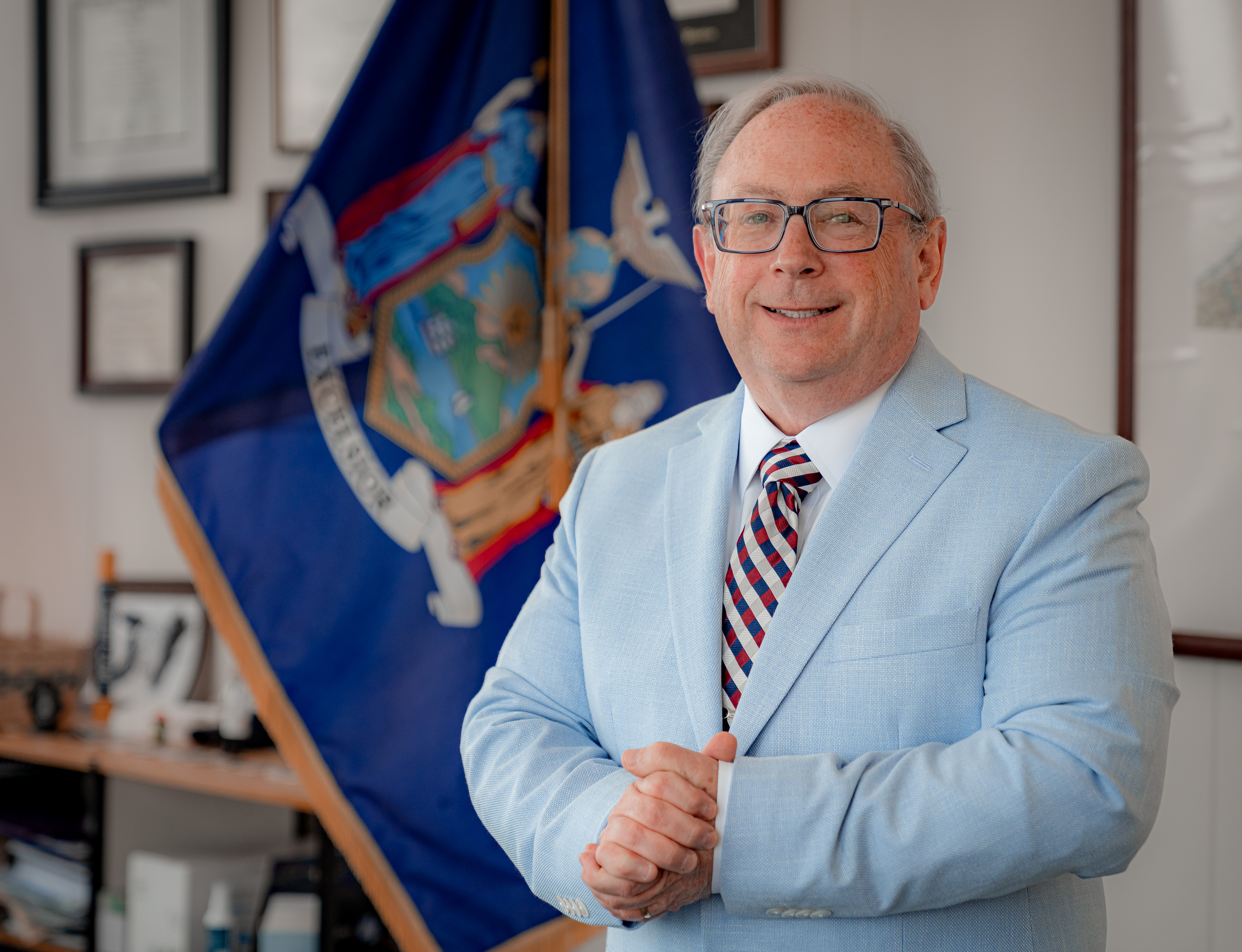 James V. McDonald, M.D., M.P.H., has served as New York State Commissioner of Health since January 2023. As Commissioner, he leads one of the nation’s largest and most complex public health agencies, overseeing efforts to protect and improve the health of New Yorkers across the state. James V. McDonald, M.D., M.P.H., has served as New York State Commissioner of Health since January 2023. As Commissioner, he leads one of the nation’s largest and most complex public health agencies, overseeing efforts to protect and improve the health of New Yorkers across the state.
Under his leadership, the New York State Department of Health has strengthened and modernized New York’s public health system following the COVID-19 pandemic, reinforced its commitment to health equity, expanded public health preparedness efforts, and advanced science-based public health policy and communication. Dr. McDonald has also led initiatives focused on maternal and child health, healthcare access, overdose prevention, infectious disease response, and strengthening trust in public health information.
Prior to joining the New York State Department of Health in July 2022, Dr. McDonald served at the Rhode Island Department of Health from 2012 to 2022 in multiple leadership roles, including Interim Director of Health, Chief Administrative Officer of the Board of Medical Licensure and Discipline, Medical Director for the COVID Unit, Medical Director for the Division of Healthcare Quality and Safety, and Medical Director for the Drug Overdose Prevention Program. He also served on the Governor’s Task Force on Preventing Overdose Deaths.
Dr. McDonald holds faculty appointments at the University at Albany School of Public Health and the Brown University School of Public Health. He earned his Doctor of Medicine degree from Loyola University Chicago Stritch School of Medicine, completed his pediatric residency in the U.S. Navy, and completed his preventive medicine residency through the State University of New York. He earned his Master of Public Health degree from the University of North Carolina at Chapel Hill and his Bachelor of Science degree in Biology from Siena College.
Board certified in both pediatrics and preventive medicine, Dr. McDonald’s career has included service as an officer in the U.S. Navy, private practice in rural communities experiencing healthcare shortages, and service with the Indian Health Service in the Navajo Nation, where he served as Medical Director of Outpatient Medicine in Chinle, Arizona.
In May 2024, Siena College awarded Dr. McDonald the degree of Doctor of Humane Letters in recognition of his exemplary achievement, leadership, and commitment to humanitarian ideals.
Epidemiology Foundation 2026 Endowed Lecture Speaker
Montrece McNeill-Williams, JD, MPH, PCC, BCC
(formerly Montrece McNeill Ransom)
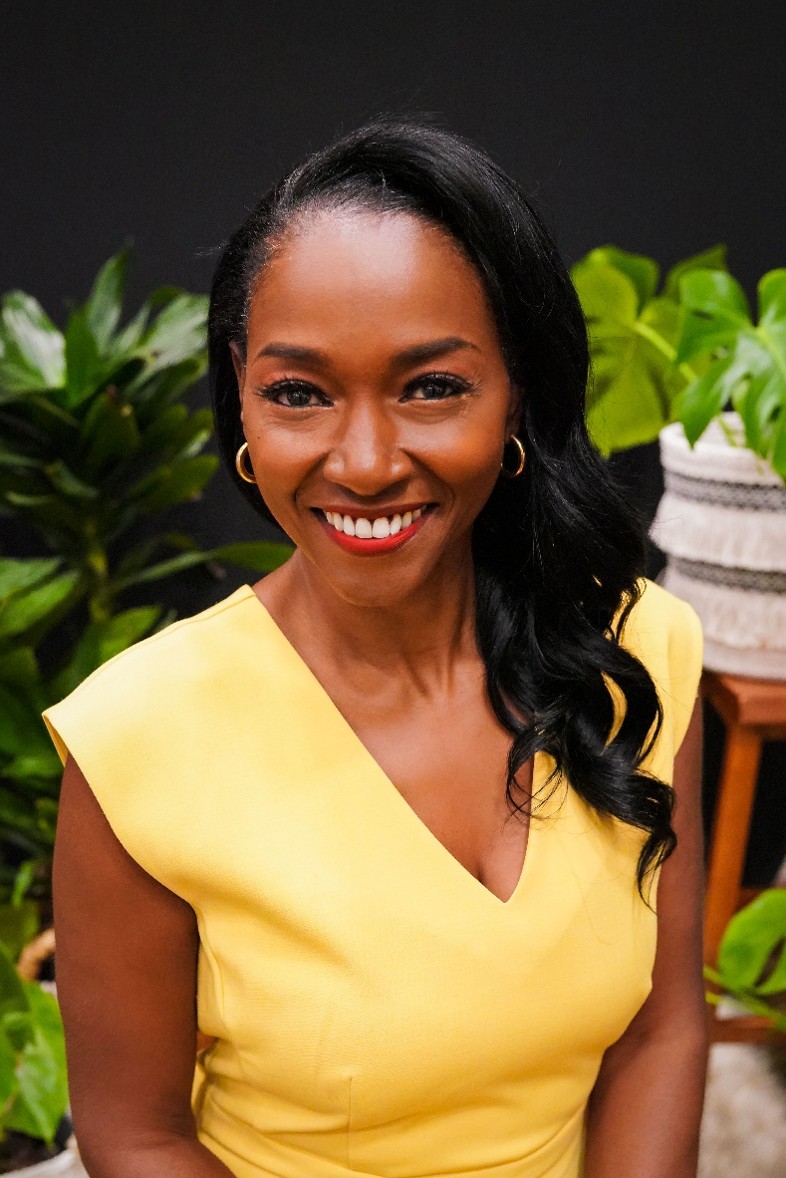 Montrece currently serves as the Executive Director of the Cordell Institute for Policy in Medicine & Law at Washington University in St. Louis, where she leads interdisciplinary scholarship and policy engagement at the intersection of health, law, technology, ethics, and governance. Montrece currently serves as the Executive Director of the Cordell Institute for Policy in Medicine & Law at Washington University in St. Louis, where she leads interdisciplinary scholarship and policy engagement at the intersection of health, law, technology, ethics, and governance.
McNeill-Williams previously spent nearly two decades at the Centers for Disease Control and Prevention, where she helped advance the fields of public health law and legal epidemiology and their application to public health practice. She is a longtime educator and Lead Editor of Public Health Law: Concepts and Case Studies. Her scholarship and national leadership span public health law, public health leadership, vaccine law and policy, health equity, and the legal and ethical dimensions of public health decision making. She is also a nationally recognized voice on belonging and leadership, exploring how belonging shapes the people, institutions, and systems responsible for protecting the public’s health.
Across her work, McNeill-Williams is guided by a simple belief that public health is ultimately about people, and that the laws, policies, institutions, and communities we build should create the conditions for people to be healthy, thrive, and belong.
The Abraham Lilienfeld Award Recipient
Mahasin S. Mujahid, Ph.D., M.S., FAHA
 Mahasin S. Mujahid, Ph.D., M.S., FAHA, is the Lillian E. I. and Dudley J. Aldous Chair at the University of California, Berkeley, School of Public Health. Dr. Mujahid is a social epidemiologist with over 15 years of experience in health equity research, focusing on how structural and contextual conditions shape cardiovascular and maternal health and contribute to racial and ethnic inequities across the life course. Her work integrates epidemiologic, statistical, and geospatial approaches to develop innovative methods for measuring multilevel determinants of health, with a particular focus on neighborhood environments. Her research has advanced neighborhood-level data resources and understanding of how social and physical environments influence health outcomes. Mahasin S. Mujahid, Ph.D., M.S., FAHA, is the Lillian E. I. and Dudley J. Aldous Chair at the University of California, Berkeley, School of Public Health. Dr. Mujahid is a social epidemiologist with over 15 years of experience in health equity research, focusing on how structural and contextual conditions shape cardiovascular and maternal health and contribute to racial and ethnic inequities across the life course. Her work integrates epidemiologic, statistical, and geospatial approaches to develop innovative methods for measuring multilevel determinants of health, with a particular focus on neighborhood environments. Her research has advanced neighborhood-level data resources and understanding of how social and physical environments influence health outcomes.
Dr. Mujahid currently serves as Principal Investigator of the Social Determinants Core for the Risk Underlying Rural Areas Longitudinal Study (RURAL), a longitudinal cardiovascular cohort study of a racially and ethnically diverse population living in rural counties in Appalachia and the Mississippi Delta. In this role, she leads a multidisciplinary team examining the broad spectrum of social and psychological factors that contribute to cardiovascular risk and resilience in rural populations. Her work in RURAL has also supported the development of innovative ancillary studies, including research to create comprehensive measures of neighborhood physical and social environments and examine their implications for cardiovascular health. Dr. Mujahid has additionally made sustained contributions to the field through leadership, mentorship, and service. She has held leadership positions within the American Heart Association, including serving as Chair of the Social Determinants Scientific Subcommittee, and has contributed to national efforts addressing cardiovascular health equity. At UC Berkeley, she is Chair of the Division of Epidemiology and formerly Director of the Epidemiology/Biostatistics MPH Program and Co-Director of the MPH/MCP dual-degree program. She has mentored more than 100 undergraduate and graduate students and has served as a mentor and leader on multiple NIH training grants and career development awards. Her commitment to mentorship has earned her several UC Berkeley awards, including the Carol Soc Graduate Student Mentoring Award, the Distinguished Faculty Mentor Award, and the Leon Henkin Citation for Distinguished Service.
Dr. Mujahid earned her B.S. in Mathematics from Xavier University of Louisiana, her M.S. in Biostatistics and Ph.D. in Epidemiology from the University of Michigan, and was a Robert Wood Johnson Health and Society Scholar at Harvard University.
ACE 2026 Annual Meeting
September 14 - 17, 2025
Aloft Hotel in Downtown Buffalo, New York
American College of Epidemiology Room Block
Start Date: Sunday, September 13, 2026
End Date: Thursday, September 17, 2026
If you experience issues when booking in the hotel block please contact
Karen Wendling - [email protected]
Hotel(s) offering your special group rate:
Aloft Buffalo Downtown for 194.00 USD per night
Last Day to Book : Monday, August 17, 2026
For those of you that will be driving to the Aloft
there is a parking garage at the hotel and the charge is $17 per day!
When flying to Buffalo we recommend
Buffalo Niagara International Airport - This is the primary airport for commercial passenger flights in Western New York, handling most major airlines and cargo.
|